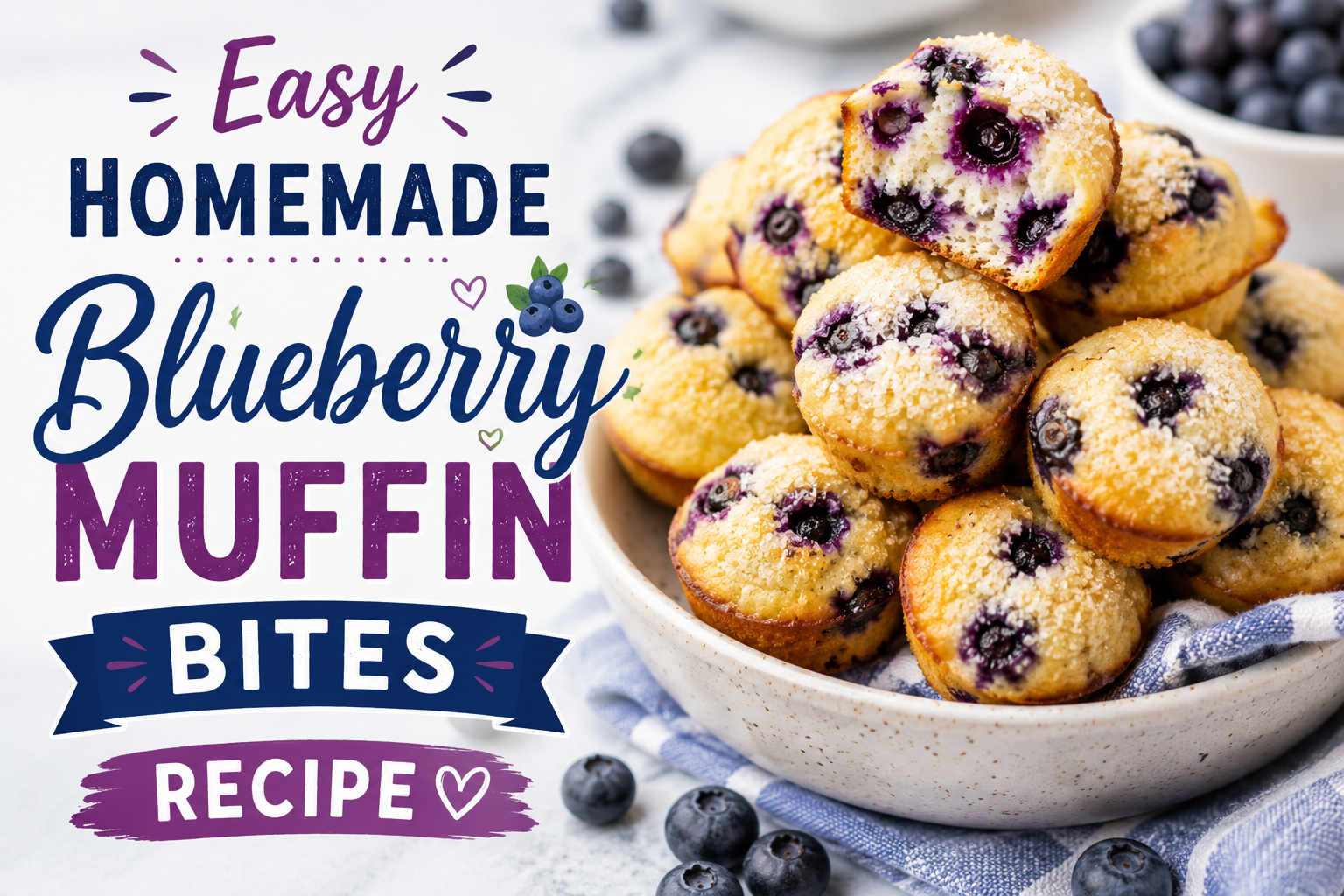
Easy Homemade Blueberry Muffin Bites Recipe
es

Mini muffins get dismissed as a gimmick. These aren’t.
The smaller size isn’t about portion control or presentation points — it changes how the muffin actually bakes. More surface area means more golden crust per bite, and the center-to-edge ratio tilts toward moist interior rather than thick dome. You get the best parts of a blueberry muffin concentrated into a two-bite package.
This recipe is genuinely simple: one bowl, basic pantry ingredients, no mixer, no special technique. The full recipe, troubleshooting for every common mistake, storage instructions, and a few tested variations are all below.
Recipe at a Glance
| Prep Time | 12 minutes |
| Bake Time | 11–14 minutes |
| Total Time | About 30 minutes |
| Yield | About 36 mini muffins |
| Pan Needed | Mini muffin tin (24-cup) |
| Skill Level | Beginner — no mixer needed |
“A muffin recipe isn’t truly easy until you’ve made it enough times that the bowl barely needs washing between batches.”

Fresh or frozen — the blueberry choice matters, and both work if you handle them correctly.
Why Mini Size Actually Bakes Better
Standard muffins have a structural problem: the dome bakes through before the center does, which forces you to either underbake (wet center) or overbake (dry edges). Mini muffins sidestep this because the batter volume is small enough that the heat reaches the center well before the outside overcooks.
The other benefit is crust-to-interior ratio. In a standard muffin, most of what you eat is interior crumb. In a mini muffin, nearly every bite includes some golden exterior — and that exterior, where the butter has browned slightly and the sugar has set, is where the best flavor lives.
Mini vs. Standard Muffin Comparison
| Factor | Mini Muffins | Standard Muffins |
|---|---|---|
| Bake Time | 11–14 min | 18–22 min |
| Crust Per Bite | High | Low |
| Risk of Wet Center | Low | Higher |
| Yield Per Batch | ~36 | ~12 |
| Cooling Time | 5 minutes | 10–15 minutes |
Ingredients — What You Need and Why
The Full Ingredient List
- 2 cups (250g) all-purpose flour
- 2 teaspoons baking powder
- ¼ teaspoon baking soda
- ½ teaspoon salt
- ¾ cup (150g) granulated sugar
- ⅓ cup (75g) unsalted butter, melted and slightly cooled
- 2 large eggs, room temperature
- ¾ cup (180ml) whole milk, room temperature
- ¼ cup (60g) plain Greek yogurt or sour cream
- 1½ teaspoons vanilla extract
- 1½ cups (200g) fresh or frozen blueberries
- Optional topping: 2 tablespoons coarse sugar for sprinkling — creates a light crunch on top
The Ingredients That Actually Matter
Greek yogurt or sour cream: This is the ingredient most recipes leave out and shouldn’t. It adds moisture, tang, and fat in a way that keeps these muffin bites tender for 2–3 days after baking rather than drying out the next morning. Don’t substitute with regular plain yogurt — it has too much water.
Melted butter, not softened: Softened butter requires creaming, which requires a mixer. Melted butter mixes in one bowl with a whisk. The texture difference is minor for mini muffins — the smaller size compensates for what you’d lose from creaming.
Room temperature eggs and milk: Cold eggs straight from the fridge create a lumpy batter because they cause the melted butter to partially solidify on contact. Leave both out for 20 minutes before starting.
Blueberries — fresh vs. frozen: Both work. Fresh blueberries give cleaner pockets of fruit with no color bleed. Frozen blueberries tend to bleed purple into the batter — not a problem for flavor, but the batter turns grayish-blue. If using frozen, do not thaw them first; add straight from the freezer to minimize bleeding.

🫐 The Full Recipe: Step-by-Step
Step 1 — Prep Your Pan and Oven
Preheat oven to 400°F (205°C). Grease a mini muffin tin generously with butter or non-stick spray. Don’t use paper liners — mini muffin papers tend to stick and peel the sides off when removed. A well-greased pan releases cleanly and gives better browning on the sides.
Step 2 — Mix the Dry Ingredients
In a large bowl, whisk together the flour, baking powder, baking soda, salt, and sugar. Whisk for a full 30 seconds — you’re distributing the leavening agents evenly so no single muffin gets more baking powder than another. Make a well in the center.
Step 3 — Mix the Wet Ingredients Separately
In a separate medium bowl or large measuring jug, whisk together the melted butter, eggs, milk, Greek yogurt, and vanilla extract until smooth and combined. The yogurt may take an extra moment to fully incorporate — keep whisking until no streaks remain.
Step 4 — Combine Wet and Dry (Critical Step)
Pour the wet ingredients into the well in the dry ingredients. Fold with a rubber spatula using slow, large strokes — fold from the bottom of the bowl upward rather than stirring in circles. Stop mixing the moment you no longer see dry flour streaks. The batter will look lumpy. That is correct. Lumpy batter = tender muffins. Smooth batter = tough, dense muffins. This is the single most important thing to get right.
Step 5 — Fold In the Blueberries
Toss fresh blueberries with 1 teaspoon of flour before folding in — this helps them stay suspended in the batter rather than sinking to the bottom. Add them to the batter and fold gently, just 3–4 strokes, to distribute without bursting the berries. If using frozen blueberries, skip the flour coating and work quickly so they don’t bleed too much before the batter is in the tin.
Step 6 — Fill the Tin
Fill each mini muffin cup to about ¾ full. A small cookie scoop (1-tablespoon size) is ideal for speed and consistency. Filling more than ¾ creates overflow; filling less gives flat, pale tops without enough dome to brown properly. If you have coarse sugar for topping, sprinkle a small pinch on each filled cup now, before baking.
Step 7 — Bake and Cool
Bake at 400°F for 11–14 minutes. Check at 11 minutes: the tops should be golden (not pale, not dark brown) and a toothpick inserted in the center of a middle muffin should come out with just a crumb or two, not wet batter. Don’t open the oven before the 11-minute mark — early opening causes muffins to sink in the center.
Cool in the tin for exactly 5 minutes — long enough to set, short enough that the steam doesn’t make them soggy. Then run a thin knife around the edge of each cup and lift out onto a wire rack. They will continue to firm up as they cool.

🔗 More Baking Recipes
Already baking? This peach cobbler is next on the list
One pan, one bowl, no pastry technique — the cobbler recipe that works every time with fresh or canned peaches.
6 Mistakes That Ruin Blueberry Muffin Bites
1. Overmixing the Batter
The most common muffin mistake, full stop. Overmixing develops gluten, which makes muffins rubbery and tough instead of tender. Fold until just combined and stop. Lumps are not a problem. Overmixed batter that looks smooth is the problem.
2. Cold Ingredients
Cold eggs dropped into melted butter seize the fat and create a separated, curdled batter that doesn’t bake evenly. It do does the same. Both need to be at room temperature before you start. Twenty minutes on the counter is enough.
3. Old Baking Powder
Baking powder loses potency after 6–12 months, especially once opened. If your muffins are coming out flat with no dome, this is the first thing to check. Test it by dropping a teaspoon into hot water — it should fizz vigorously. If it barely bubbles, replace it before baking.
4. Thawing Frozen Blueberries Before Adding
Thawed blueberries have released their juice, which bleeds aggressively through the batter and makes the muffins look and taste muddy. Add frozen berries directly from the freezer without thawing. Work quickly once they’re in the batter.
5. Filling Cups Too Full
Muffin batter expands. Fill more than ¾ full and you’ll get overflow that bakes onto the pan and makes removal difficult. It also changes the shape — the sides bake into the pan rather than the dome rising cleanly above the cup edge.
6. Skipping Greek Yogurt or Sour Cream
This seems like an optional ingredient until you try the version without it. Without the fat and acid from yogurt or sour cream, these muffins dry out by the next morning. With it, they stay moist and tender for 2–3 days at room temperature.

Tested Variations Worth Trying
Get the base recipe right first, then come back to these.
| Variation | What to Change |
|---|---|
| Lemon Blueberry | Add zest of 1 lemon to the wet ingredients. Brightens the flavor significantly. |
| Cream Cheese Center | Place a small cube of cream cheese (½ tsp) in the center of each cup before baking. |
| Streusel Topped | Mix 3 tbsp flour, 2 tbsp sugar, 1 tbsp cold butter — crumble on top before baking. |
| Whole Wheat | Replace half the flour with whole wheat flour. Slightly denser but more filling. |
| Mixed Berry | Replace half the blueberries with raspberries or diced strawberries. |
Storing and Freezing
Room Temperature
Store in an airtight container lined with a paper towel. The paper towel absorbs condensation that would otherwise make the tops sticky. These keep well for 2–3 days. Do not refrigerate — refrigerating muffins accelerates staling by pulling moisture from the crumb.
Freezing (the Smart Move)
Blueberry muffin bites freeze exceptionally well, which is a genuine reason to make a double batch. Let them cool completely, then freeze in a single layer on a baking sheet for 1 hour. Once frozen solid, transfer to a zip-lock freezer bag. They keep for up to 3 months.
To reheat: microwave 3–4 frozen muffin bites for 25–35 seconds. They come out tasting freshly baked. This is the actual reason “never last more than a day” is a thing — people eat them straight from the microwave at 7am.
Make-Ahead Options
If you want to prepare these in advance without baking them fully, you have two practical options. First: mix the dry ingredients and the wet ingredients in separate bowls, cover both, and refrigerate overnight. Combine and bake the next morning — the batter comes together in the time the oven preheats. Second: bake a full batch, freeze immediately while fresh, and reheat from frozen as needed. The second approach gives you better results than refrigerating unbaked batter for more than 12 hours, since leavening starts losing potency after the wet and dry mix.
Why These Bake at 400°F — The Short Science
Most muffin recipes call for 350–375°F, which is appropriate for large, thick batter volumes that need time to cook through without burning the outside. Mini muffins are shallow enough that 400°F works correctly — the high initial heat causes rapid steam production inside the batter, which pushes the dome up quickly and sets it before the outside can over-brown. At 350°F, mini muffins can sit flat and pale rather than developing the dome that makes them look and taste like a properly baked muffin rather than a dense little cake.
⭐ Key Takeaways
- Stop mixing the moment you can’t see dry flour. Lumpy batter is correct. Smooth batter is over-mixed and will produce tough muffins.
- Greek yogurt or sour cream is not optional. It’s what keeps these moist past day one.
- Room temperature eggs and milk are non-negotiable — cold dairy and eggs seize melted butter and ruin the batter structure.
- Add frozen blueberries straight from the freezer — thawing them first causes heavy color bleed and makes the batter taste watery.
- Fill cups to exactly ¾ full. More = overflow. Less = flat, pale tops.
- Bake at 400°F — higher heat than you’d think, but mini muffins need it for a proper dome and golden top.
- These freeze brilliantly — make a double batch and reheat from frozen in 30 seconds.

Conclusion: One Bowl, 30 Minutes, Worth It Every Time
The gap between a forgettable blueberry muffin and a memorable one isn’t a complicated ingredient or a special technique. It’s stopping at the right moment — before the batter is smooth, before the oven door opens too early, before the tin sits too long after baking.
This recipe works because it’s built around those moments rather than around complexity. One bowl, pantry staples, no mixer, 30 minutes. The mini size delivers better results than a standard muffin pan for this recipe specifically, and the Greek yogurt keeps them from drying out fast.
Make a batch this week. Then immediately make a second one and freeze it before anyone notices.
“The best baked goods aren’t the ones with the most ingredients. They’re the ones where someone understood when to stop.”
Frequently Asked Questions

My name is Hamza Waheed, and I am an SEO expert with over 7+ years of experience in search engine optimization and the keto blogging industry. I specialize in creating SEO-driven content focused on keto recipes, low-carb living, and organic traffic growth. I combine technical SEO skills with practical health and nutrition content to deliver useful and engaging information for readers.