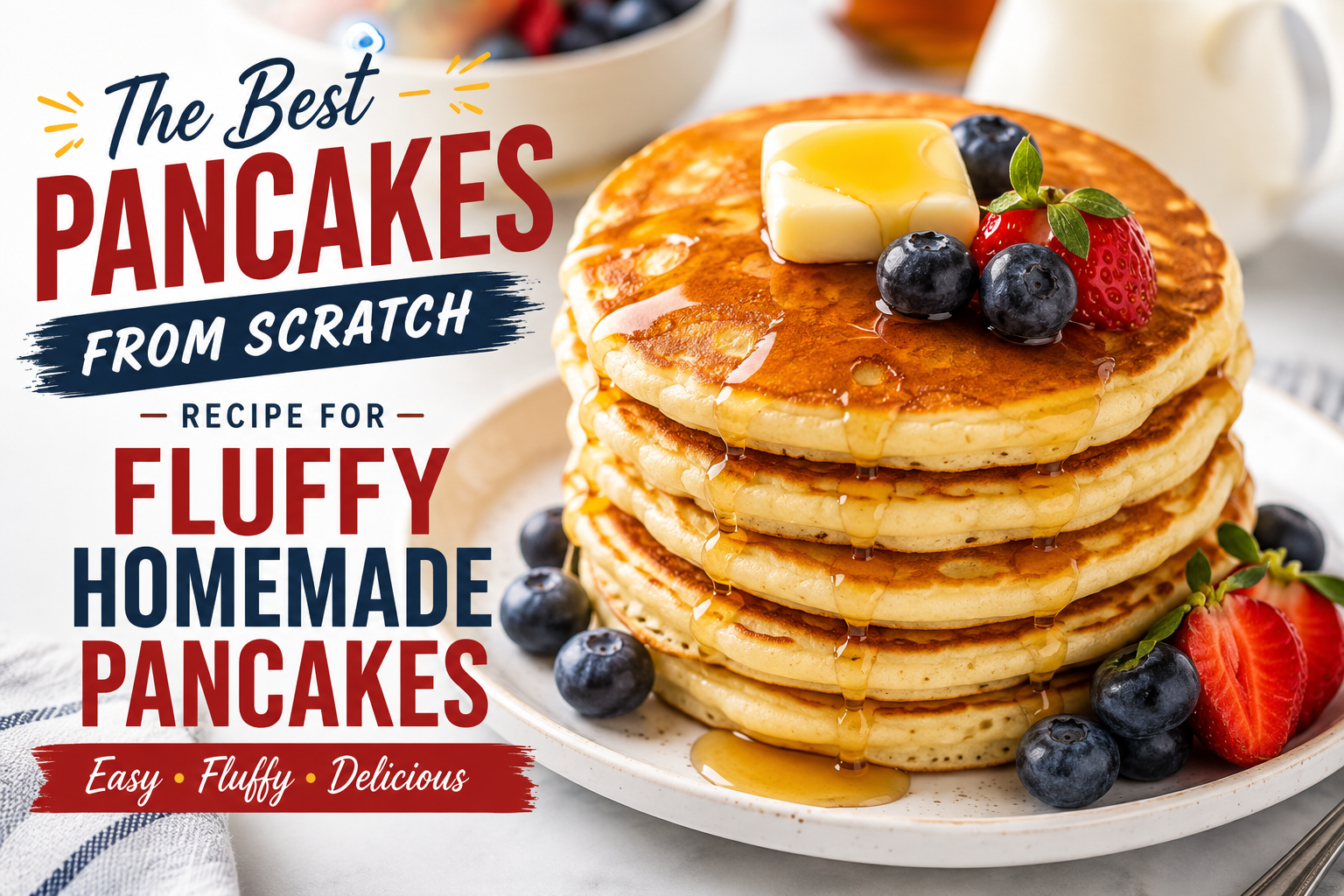
The Best Pancakes From Scratch Recipe for Fluffy Homemade Pancakes

Most pancake recipes fail at the same exact moment — and it’s not the recipe that’s wrong.
It’s one of three things: the batter gets over-mixed until it’s smooth and elastic, the pan is the wrong temperature before the first pancake hits, or the cook flips too early and flattens the rise before it sets. The recipe itself is almost irrelevant — those three mistakes will ruin even a technically correct batter.
This article gives you the complete recipe, but more importantly it gives you the why behind every step — so you understand what you’re doing and can fix it when something looks off. The result is tall, cloud-soft, fluffy pancakes from scratch that stay that way until the last bite on the plate.
Prep Time
10 min
Cook Time
15 min
Total Time
25 min
Servings
8–10
Difficulty
Easy
Why Pancakes From Scratch Beat Any Box Mix
Box mix pancakes taste fine — but fine is the ceiling. The issue is that boxed mixes contain dried, pre-mixed ingredients with stabilizers and shelf-life additives that prevent them from ever tasting genuinely fresh. You can make them better by adding vanilla or swapping water for milk, but you’re still working against the base.
Pancakes from scratch use the same five basic ingredients you almost certainly already have: flour, baking powder, salt, an egg, and milk. With one more — a tablespoon of melted butter — you get a pancake with a buttery flavor that no box mix touches. The total time difference between scratch and box is about three minutes.
Box Mix vs. From Scratch — Side by Side
| Factor | Box Mix | From Scratch |
|---|---|---|
| Total time | 20 min | 25 min |
| Flavor control | ❌ Limited | ✅ Full |
| Freshness | ❌ Pre-dried | ✅ Real ingredients |
| Customizable | ⚠️ Partially | ✅ Completely |
| Cost per batch | Higher | Lower |
“The box mix and the scratch recipe take the same amount of time. One of them tastes like Sunday morning. The other tastes like a box.”
The Science Behind Fluffy Pancakes
Understanding why pancakes get fluffy tells you exactly what to protect during the process. Fluffiness comes from two gas sources working simultaneously:
1. Baking Powder (Chemical Leavening)
Baking powder reacts with liquid to produce carbon dioxide bubbles the moment it gets wet. These bubbles are what make the batter rise during cooking. Too much baking powder creates a chemical, slightly bitter taste. Too little and pancakes don’t rise at all. The right amount — 2 teaspoons per cup of flour — creates the lift without any off flavor.
2. Steam (Physical Leavening)
As the pancake cooks, the liquid in the batter turns to steam. A hot pan traps this steam inside the setting batter — it has nowhere to go but up, creating the tall, domed rise you see on a perfect pancake. A pan that’s too cool lets steam escape slowly before the batter sets, producing flat, dense results.
3. Gluten (The Enemy of Fluff)
When you mix flour with liquid, gluten forms — the stretchy protein network that gives bread its chew. In pancakes, you don’t want that network to develop, because it toughens the batter and traps the gas bubbles you need for lift. This is why every good pancake recipe says “don’t over-mix” and “lumps are fine.” The lumps are undeveloped flour — exactly what you want.
The Master Pancakes From Scratch Recipe
Ingredients — Makes 8 to 10 Pancakes
Dry Ingredients
- 1½ cups (190g) all-purpose flour
- 2 tablespoons granulated sugar
- 2 teaspoons baking powder
- ¼ teaspoon baking soda
- ½ teaspoon fine salt
Wet Ingredients
- 1 cup (240ml) whole milk, room temperature
- ¼ cup (60ml) buttermilk (or add 1 tsp white vinegar to regular milk and wait 5 min)
- 1 large egg, room temperature
- 2 tablespoons unsalted butter, melted and slightly cooled
- 1½ teaspoons pure vanilla extract
For cooking: butter or neutral oil for the pan
Step-by-Step Instructions
Mix the dry ingredients
In a large bowl, whisk together the flour, sugar, baking powder, baking soda, and salt. Whisking the dry ingredients first ensures the leavening is evenly distributed — if baking powder sits in pockets, some pancakes will rise better than others.
Mix the wet ingredients separately
In a separate bowl or large measuring jug, whisk together the milk, buttermilk, egg, melted butter, and vanilla extract. Make sure the melted butter has cooled slightly before adding — if it’s very hot it can partially scramble the egg. Whisk until combined but don’t overdo it.
Combine — and stop early
Pour the wet ingredients into the dry ingredients. Using a fork or spatula, fold gently until just combined — about 10–12 strokes. The batter will look lumpy and rough. That’s correct. Stop mixing when you can no longer see large streaks of dry flour. Do not stir until smooth. Smooth batter = tough, flat pancakes.
Rest the batter for 5 minutes
Let the batter sit undisturbed for 5 minutes. During this time, the baking powder activates and begins producing bubbles, and the flour absorbs the liquid fully. The batter will thicken slightly and look even lumpier — this is good. Rested batter produces noticeably taller pancakes than batter cooked immediately.
Heat the pan correctly
Heat a non-stick skillet or griddle over medium heat for 2 full minutes before adding any batter. Add ½ teaspoon of butter and let it melt and begin to foam lightly. The butter should foam but not brown immediately — if it browns within 5 seconds, the pan is too hot. Reduce heat and let it cool slightly before adding batter.
Pour and wait for the bubbles
Pour approximately ¼ cup of batter per pancake. Don’t spread it — let it settle naturally. Cook until bubbles form across the entire surface of the pancake and the edges look set and matte rather than shiny and wet. This takes 2–3 minutes. Flip only once.
Flip once, cook briefly
Slide a thin spatula fully under the pancake and flip in one confident motion. The second side cooks for just 1–1½ minutes — it needs less time because the batter is already partially set. The second side will look paler and slightly less even than the first. That’s normal and correct.
Keep warm while you finish the batch
Place finished pancakes on a baking sheet in a 200°F (93°C) oven while you cook the rest. Never stack hot pancakes directly — they steam each other and go soggy. Single layer on the baking sheet keeps them warm and firm for up to 20 minutes.
Why Every Ingredient Matters
Every ingredient in this recipe is there for a reason. Knowing what each one does helps you make smart swaps and understand what goes wrong when something isn’t working.
| Ingredient | What It Does | Best Substitute |
|---|---|---|
| All-purpose flour | Structure and body | Cake flour (lighter), or 1:1 GF flour blend |
| Baking powder | Chemical leavening — the main rise | No direct substitute — don’t skip |
| Baking soda | Reacts with buttermilk acid for extra lift and browning | Omit only if not using buttermilk |
| Sugar | Sweetness + golden-brown color | Brown sugar (adds depth), honey (reduce to 1 tbsp) |
| Salt | Flavor amplifier — without it pancakes taste flat | Don’t reduce |
| Egg | Binds batter, adds richness and structure | 1 flax egg (1 tbsp ground flax + 3 tbsp water) |
| Whole milk | Hydrates flour, adds richness | Oat milk, almond milk (slight texture change) |
| Buttermilk | Acid reacts with baking soda for extra fluff + tangy flavor | 1 tsp white vinegar in ¼ cup milk, wait 5 min |
| Melted butter | Flavor, tenderness, prevents sticking | Neutral oil (same amount) — good, but less flavor |
| Vanilla extract | Flavor depth — amplifies the butter and sugar | Almond extract (use ½ tsp only — much stronger) |
🔗 More Breakfast Recipes
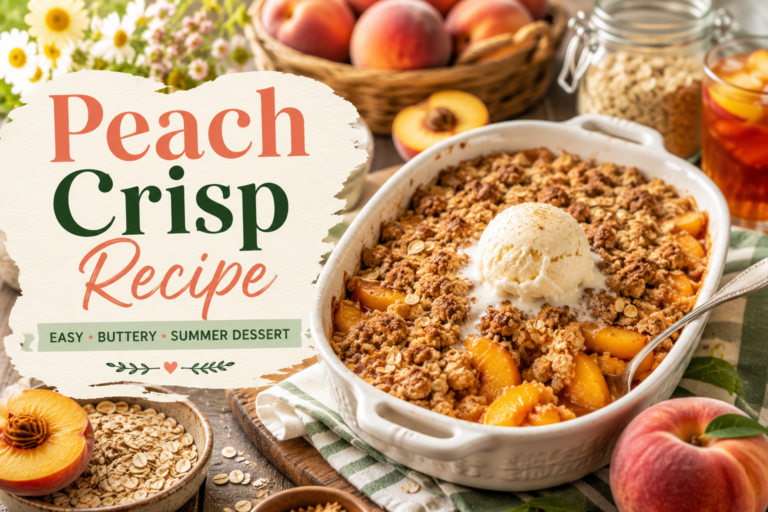
Making pancakes for a summer brunch? Add this peach recipe to the table
10 fresh peach recipes — from peach salsa to grilled peach salad to peach cobbler. The perfect thing to serve alongside a stack of pancakes.

Blueberries are the most forgiving pancake add-in — press them in gently after pouring the batter, never fold into the batter itself.
8 Pancake Variations Using the Same Base Recipe
The master recipe is the foundation. Every variation below uses the same batter — the changes are small additions or swaps that transform the pancake completely.
🫐 Blueberry Pancakes
After pouring batter onto the pan, press 6–8 fresh or frozen blueberries into the surface of each pancake. Never fold berries into the batter — they bleed purple and the batter turns grey.
🍌 Banana Pancakes
Mash 1 very ripe banana and fold into the wet ingredients before combining. Reduce sugar to 1 tablespoon — ripe banana is sweet. The banana adds moisture, sweetness, and a gentle flavor without overpowering.
🍫 Chocolate Chip Pancakes
Same as blueberries — press chips into the surface of the batter in the pan, don’t fold them in. Use mini chips for more even distribution. Add an extra pinch of salt to the batter to make the chocolate flavor pop.
🎃 Pumpkin Pancakes
Add ¼ cup canned pumpkin purée and 1 teaspoon pumpkin pie spice to the wet ingredients. Reduce milk by 2 tablespoons to compensate for the extra moisture from the pumpkin. Rich, warmly spiced, great with brown butter and pecans.
🌾 Whole Wheat Pancakes
Replace half the all-purpose flour with whole wheat flour. Add 1 extra tablespoon of milk — whole wheat absorbs more liquid. These pancakes are slightly denser and nuttier but still genuinely fluffy if you don’t over-mix.
🍋 Lemon Ricotta Pancakes
Add ½ cup whole-milk ricotta and zest of 1 lemon to the wet ingredients. These pancakes are intensely tender and slightly tangy. The ricotta makes them richer than standard — serve with fresh berries and a light dusting of powdered sugar.
🍓 Strawberry Pancakes
Dice fresh strawberries small (about ¼ inch) and press into the pancake surface in the pan. Alternatively, macerate sliced strawberries with 1 teaspoon sugar and serve as a warm topping instead of syrup.
🥞 Buttermilk-Only Pancakes
Replace both the milk and buttermilk with 1¼ cups full buttermilk. Increase baking soda to ½ teaspoon to handle the extra acid. The most tangy, classic version of a Southern-style fluffy pancake.
Pancake Troubleshooting Guide
Something went wrong? The problem is almost always identifiable — and almost always fixable next time.
| Problem | Most Likely Cause | Fix |
|---|---|---|
| Flat, dense | Over-mixed batter, old baking powder, or cold ingredients | Stop mixing earlier, use fresh leavening, room-temp eggs/milk |
| Burnt outside, raw inside | Pan too hot | Reduce to medium, wait 2 min, test with a drop of water |
| Pale, not browning | Pan not hot enough, or no fat in pan | Heat pan 2 full min before adding batter, use butter not oil spray |
| Sticking to pan | Pan not hot enough before adding fat, or pan needs seasoning | Add butter when pan is hot, wait for sizzle, then pour batter |
| Rubbery texture | Way over-mixed — gluten developed fully | 10–12 strokes max next time, lumps are fine |
| Soggy when stacked | Stacking hot pancakes traps steam | Single layer on baking sheet in 200°F oven while finishing batch |
| Batter too thick to spread | Too much flour or not enough liquid | Add milk 1 tablespoon at a time until batter pours easily off the spoon |

Pancakes from scratch with fresh toppings — the gap between this and a box mix is much larger than most people expect.
Make Ahead, Storage and Reheating
Can You Make Pancake Batter Ahead?
Yes, but with one caveat — the baking powder loses about 30% of its lift after 30 minutes in liquid. For same-morning pancakes, mix the dry and wet ingredients separately the night before, store them separately in covered bowls in the fridge, and combine them in the morning just before cooking. This gives you almost all the convenience of pre-made batter with none of the flat-pancake problem.
Storing Cooked Pancakes
- Refrigerator: Stack cooled pancakes with a small piece of parchment between each one to prevent sticking. Store in an airtight container for up to 3 days.
- Freezer: Freeze in a single layer on a baking sheet first, then transfer to a freezer bag. Keeps for 2 months. The parchment-between-layers trick works here too.
- Best reheating method: Toast in a toaster or in a dry skillet over medium heat for 1 minute per side. Microwaving makes them soft and slightly soggy — it works but the texture degrades. The toaster brings back the slight crispness on the outside that makes them taste fresh-made.
Topping Ideas Beyond Maple Syrup
Maple syrup is the default — but these are worth trying at least once.
- Brown butter and flaky salt — melt butter in a pan until it smells nutty and turns amber, pour over stack, add one pinch of flaky salt. This is arguably better than maple syrup.
- Honey and ricotta — a spoonful of whole-milk ricotta on top of each pancake, drizzle of good honey, lemon zest.
- Macerated strawberries — toss sliced fresh strawberries with 1 teaspoon sugar and a squeeze of lemon juice, wait 10 minutes. The sugar draws out the juice and creates a natural syrup.
- Peanut butter and banana — warm peanut butter (microwave 20 seconds), sliced ripe banana, a drizzle of honey.
- Whipped cream and blueberry compote — simmer 1 cup blueberries with 2 tablespoons sugar and a squeeze of lemon for 5 minutes until jammy.
- Greek yogurt and granola — instead of syrup, a scoop of plain Greek yogurt, a handful of crunchy granola, and a drizzle of honey.
⭐ Key Takeaways
- Do not over-mix. 10–12 strokes, lumpy batter, stop. This is the single most important rule in the entire recipe.
- Rest the batter 5 minutes after mixing — batter that rests produces noticeably taller pancakes than batter cooked immediately.
- Heat the pan for 2 full minutes before adding any batter — an under-heated pan produces pale, flat, sticking pancakes regardless of how good the batter is.
- Wait for bubbles across the whole surface before flipping — not just at the edges. Flipping early collapses the rise before it sets.
- Flip exactly once. Flipping more than once deflates the pancake and produces an uneven, tough texture.
- Buttermilk is the secret ingredient — its acid reacts with baking soda for extra lift and adds a slight tang that makes the pancake taste more complex. Make a quick substitute with milk and vinegar if you don’t have it.
- Keep finished pancakes in a 200°F oven, single layer — stacking hot pancakes creates steam that makes them soggy before they reach the table.
Conclusion: Five Minutes of Technique, Years of Great Pancakes
The gap between flat, mediocre pancakes and tall, fluffy ones isn’t talent or equipment. It’s understanding three things: don’t over-mix, heat the pan properly, and wait for the bubbles before flipping. That’s the full skill set. Once it’s in your hands, you never make a bad batch again.
The recipe in this article has been designed to be both the simplest and the best version of pancakes from scratch — one bowl, ingredients you always have, 25 minutes from dry ingredients to a plate. The buttermilk addition lifts it from a standard recipe to the one people remember. The resting step makes it reliable every time regardless of humidity, altitude, or the particular brand of flour in your cupboard.
Make it this weekend. Apply the technique once with full attention to the bubble-watching, the pan temperature, and the folding. After that, it runs on muscle memory.
“Perfect pancakes are not a talent. They are a technique — and every technique can be learned once and used forever.”
Frequently Asked Questions

My name is Hamza Waheed, and I am an SEO expert with over 7+ years of experience in search engine optimization and the keto blogging industry. I specialize in creating SEO-driven content focused on keto recipes, low-carb living, and organic traffic growth. I combine technical SEO skills with practical health and nutrition content to deliver useful and engaging information for readers.