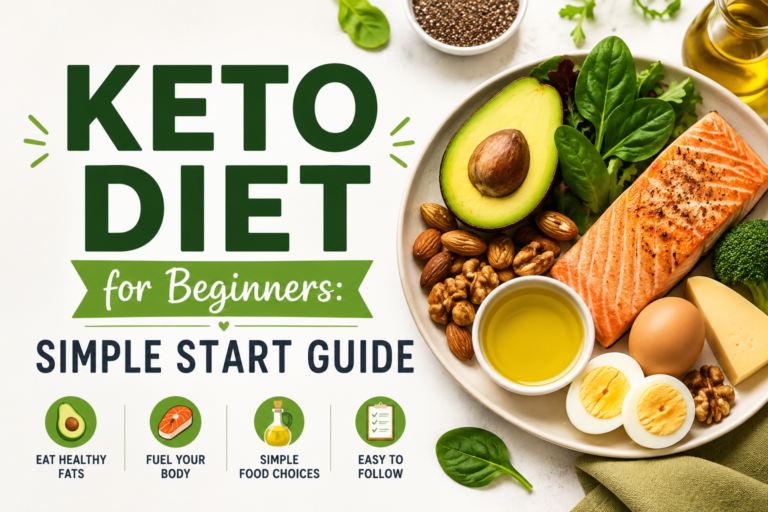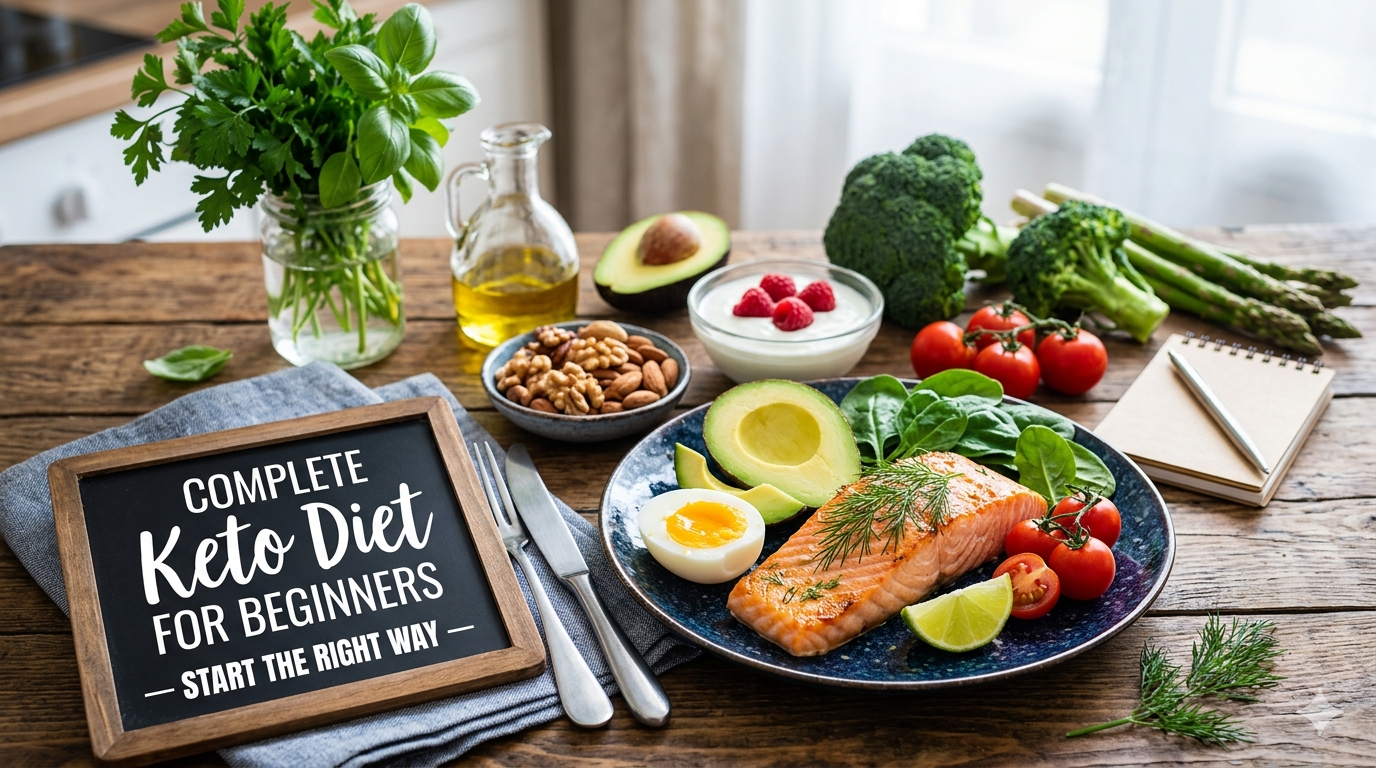
Complete Keto Diet for Beginners — Start the Right Way

Starting a keto diet for beginners sounds simple on paper: cut carbs, eat fat, lose weight. But the first week is usually a mess of confusion. What can you actually eat? How many carbs is too many? Why do you feel terrible on day three? Is that normal or did you do something wrong?
This guide answers every one of those questions in full. It covers exactly four things every beginner needs before they start: a clear explanation of how keto actually works inside your body, a complete food list with real carb counts, the seven mistakes that derail most people in week one, and real beginner meals they can cook tonight. Whether you came here from a Pinterest pin about the food list, the mistakes, or the meal ideas, every section stands on its own and gives you everything you need.
By the end of this page you will know exactly how to start, what to eat on day one, what to expect in your body during the first two weeks, and how to push through the hardest parts without quitting. That is more than enough to actually begin.
What Keto Actually Is and Why It Works Differently Than Every Other Diet
Most diets work by telling you to eat less. Keto works by telling your body to use a completely different fuel source. That is a fundamental difference, and it is why keto produces results that surprise people who have tried calorie restriction before without success.
Your body has two main fuel systems: glucose, which comes from carbohydrates, and ketones, which come from fat. Under normal eating conditions, carbohydrates are always available and your body uses glucose as its default fuel. It does this even when you have plenty of stored body fat available, because glucose is simply easier to access. This is why eating less on a normal diet often still leaves you hungry — your body is burning glucose but ignoring the fat reserves it actually has.
Keto changes this by removing carbohydrates below a threshold — typically under 20 to 50 grams of net carbs per day — that forces the body to switch systems. After 2 to 4 days without enough glucose coming in, the liver begins converting stored fat into molecules called ketones. These ketones become the new primary fuel source for your brain and muscles. When this switch is complete, you are in a metabolic state called ketosis. That is where the name keto comes from.
What the Macros Look Like on a Standard Keto Diet
| Macronutrient | Target Percentage | Daily Example Foods |
|---|---|---|
| Fat | 65 to 75% | Butter, olive oil, cheese, avocado, fatty cuts of meat |
| Protein | 20 to 25% | Chicken, beef, eggs, salmon, pork |
| Net Carbs | 5 to 10% | Under 20g to 50g per day, mainly from low-carb vegetables |
The carb number is the one that matters most. Most beginners get the best results staying under 20 grams of net carbs per day. Net carbs are calculated by subtracting dietary fiber from total carbohydrates on the nutrition label. Fiber does not raise blood sugar, does not trigger an insulin response, and does not interfere with ketosis, so it does not count against your daily limit.
What Happens in Your Body Day by Day When You Start Keto
- Day 1 to 2: Your body burns through its stored glycogen, which is glucose stored in the liver and muscles. You may feel relatively normal, perhaps slightly tired as stores deplete.
- Day 2 to 4: Glycogen is nearly gone. Insulin drops significantly. Your kidneys begin flushing sodium and water rapidly. This is often when keto flu symptoms appear — headache, fatigue, muscle cramps, brain fog. These are caused by electrolyte loss, not keto itself. This is covered in full in the mistakes section below.
- Day 4 to 7: Ketone production is increasing. Most people notice a reduction in hunger, more mental clarity, and more stable energy starting around day 5 or 6. The worst of the transition is behind you by this point.
- Week 2 to 4: Fat adaptation deepens. Your muscles and brain become more efficient at using ketones. Energy becomes steady throughout the day. Cravings for carbohydrates drop significantly for most people. Sleep quality often improves.
- Month 2 and beyond: Full fat adaptation. Some people experience enhanced athletic endurance, improved mental focus, and significantly reduced hunger. This is the stage where keto becomes a lifestyle rather than a diet effort.
“Keto does not ask you to eat less. It asks you to eat differently. Once your body makes the switch from glucose to fat as its primary fuel, hunger and cravings change in a way that most other diets never achieve.”
Who Keto Works Best For
Keto tends to produce strong results for people who struggle with constant hunger on calorie-restricted diets, people with blood sugar instability or insulin resistance, people who have tried lower-fat approaches for months without seeing meaningful results, and people who want an eating pattern that naturally reduces appetite without requiring constant willpower.
It is also notably effective for people with type 2 diabetes or prediabetes, as reducing carbohydrates directly lowers blood sugar demand. However, anyone on blood sugar or blood pressure medication should consult their doctor before starting keto, as dosages may need to change quickly once carb intake drops.
How Keto Compares to Other Popular Diets
| Diet | Carb Limit | Primary Fuel | Hunger Control |
|---|---|---|---|
| Keto | Under 20 to 50g net | Fat (ketones) | Very strong |
| Low-carb | Under 100g | Mixed | Moderate |
| Calorie restriction | No limit | Glucose | Weak |
| Paleo | Moderate restriction | Mixed | Moderate |
What to Eat on Keto: Complete Beginner Food List With Real Carb Counts

The most common beginner question is also the most important one: what can I actually eat? The honest answer is more varied than most people expect. Keto is not a diet of plain meat and sad salads. It includes rich, satisfying foods that most people genuinely enjoy eating — the difference is simply removing the carbohydrate-heavy items that most people have built their meals around for years.
The list below covers every category a beginner needs, with real net carb counts so you can build meals and snacks confidently without second-guessing yourself every time you open the fridge.
Proteins — Eat Freely, These Are Your Foundation
| Food | Net Carbs | Beginner Notes |
|---|---|---|
| Chicken thighs (bone-in, skin-on) | 0g | More fat than breast, more flavor, harder to dry out |
| Chicken breast | 0g | Lean — always cook in butter or oil to hit fat targets |
| Ground beef (80/20) | 0g | 80/20 fat ratio is the ideal keto cut — filling, affordable |
| Eggs (whole) | 0.5g each | The most complete keto food — protein, fat, zero carbs |
| Salmon (wild-caught preferred) | 0g | High omega-3, excellent natural fat source |
| Bacon (uncured, no sugar added) | 0g | Check the label — many brands add sugar in curing |
| Pork belly or ribs | 0g | High fat, very satiating — avoid pre-marinated versions |
| Tuna (canned in water or olive oil) | 0g | Fastest zero-carb protein, no cooking needed |
| Sardines in olive oil | 0g | Underrated keto food — high fat, calcium, omega-3 |
| Shrimp | 0g | Cooks in 3 minutes, pairs with butter and garlic perfectly |
Fats — Your Primary Energy Source, Use Generously
- Butter and ghee: Zero carbs. The most versatile cooking fat on keto. Use it for eggs, vegetables, sauces, and adding richness to any protein. Grass-fed butter has a better fat profile but regular butter works fine.
- Extra virgin olive oil: Zero carbs. Best for dressings, low to medium heat cooking, and drizzling over finished dishes. Do not use it for high-heat searing as it smokes early.
- Avocado oil: Zero carbs. High smoke point makes it ideal for roasting, searing, and frying on keto. Neutral flavor.
- Coconut oil: Zero carbs. Contains medium-chain triglycerides (MCTs) which convert to ketones more efficiently than other fats. Good for cooking and bulletproof coffee.
- Avocado: Approximately 2g net carbs per half. Loaded with potassium which helps replace electrolytes lost during the first week. Eat one daily if you can.
- Heavy whipping cream: About 0.5g net carbs per tablespoon. Adds fat and richness to coffee, sauces, soups, and keto baked goods.
- MCT oil: Zero carbs. A concentrated source of medium-chain triglycerides derived from coconut. Add a tablespoon to coffee or smoothies. Increases ketone production noticeably for most people.
Dairy — Most Is Keto-Friendly, Portions Matter
| Dairy Item | Net Carbs | Notes |
|---|---|---|
| Cheddar cheese (1 oz) | 0.5g | Staple keto food — aged cheeses generally lower in carbs |
| Cream cheese (2 tbsp) | 1g | Extremely versatile — sauces, dips, keto baking, snacks |
| Sour cream (2 tbsp) | 1g | Good topping for taco bowls, soups, and dips |
| Mozzarella (1 oz) | 0.5g | Used in keto pizza, casseroles, fathead dough |
| Parmesan (1 oz) | 0.9g | Microwave in rounds for zero-carb crispy chips |
| Brie or Camembert (1 oz) | 0.1g | Almost zero carb — one of the most keto-friendly cheeses |
| Plain full-fat Greek yogurt (half cup) | 4g | Borderline — limit to occasional use, track carefully |
Vegetables — Above-Ground Is Generally Safe
The rule beginners should remember is simple: vegetables that grow above ground are almost always keto-friendly. Vegetables that grow below ground are almost always too starchy. There are exceptions, but this rule handles 90 percent of cases correctly.
| Vegetable | Net Carbs | Best Uses |
|---|---|---|
| Spinach (1 cup raw) | 0.5g | Saute in butter, add to eggs, wilt into sauces |
| Kale (1 cup raw) | 1g | Roast with olive oil until crispy for keto chips |
| Zucchini (1 cup) | 2.5g | Spiralize into noodles, slice and roast, saute with butter |
| Cauliflower (1 cup) | 3g | Replaces rice, mashed potatoes, pizza crust |
| Broccoli (1 cup) | 4g | Roast with olive oil, steam, add to casseroles |
| Asparagus (5 spears) | 2g | Roast with butter and garlic — excellent side dish |
| Cucumber (1 cup sliced) | 2g | Raw as a snack base, add cream cheese on top |
| Mushrooms (1 cup) | 1.5g | Saute in butter, stuff with cheese, add to omelets |
| Green beans (1 cup) | 4g | Saute with butter and bacon, steam as a side |
What You Cannot Eat on Keto — And Why Each Item Breaks It
| Avoid Completely | Net Carbs Per Serving | Why It Breaks Keto |
|---|---|---|
| Bread, pasta, rice, oats | 30 to 50g | Single serving exceeds daily carb limit entirely |
| Sugar, honey, maple syrup | 12 to 17g per tbsp | Spikes blood glucose and insulin immediately |
| Potatoes (all varieties) | 26 to 33g per medium | Pure starch, one potato ends ketosis for most people |
| Corn | 24g per cup | Often mistaken as a vegetable but is a grain |
| Bananas, grapes, mangoes | 20 to 35g each | High natural fructose raises blood sugar rapidly |
| Beer | 10 to 15g per can | Liquid carbs absorbed faster than food |
| Low-fat or fat-free dairy | Higher than full-fat versions | Fat removal increases sugar content to compensate for flavor |
⚡ Key Takeaways — Keto Food List
- Net carbs are what matter. Total carbs minus fiber equals net carbs. Stay under 20g net as a beginner.
- All unprocessed meat, fish, and eggs are zero carb. You do not need to measure or limit these.
- Above-ground vegetables are generally safe. Below-ground starchy vegetables are not.
- Full-fat dairy is fine. Low-fat versions contain more sugar and are not keto-appropriate.
- Read every label on packaged food. Hidden sugars appear in condiments, deli meats, sauces, and seasonings.
- Avocado every day. It replaces lost potassium and provides excellent fat and fiber simultaneously.
Read This Before You Start Week One
Most people start keto and forget about the one thing that slows them down the most
Here is what almost nobody talks about. When you start keto and your energy improves, you naturally want to move more. Walk more. Exercise. Be more active. That is a good thing. But for a lot of people, stiff, achy joints quietly hold all of that back.
Inflammation and joint stiffness are extremely common in people who have spent years on a high-carb diet. Keto reduces systemic inflammation over time, but the joints often need extra support to keep up with a more active body.
Joint Genesis is a daily supplement specifically formulated to replenish the fluid and cartilage support your joints need to move comfortably. It targets the root cause of joint stiffness at the cellular level rather than just masking discomfort. Thousands of people use it as part of their daily routine when making a major lifestyle shift like starting keto — and the reviews from people who combined it with dietary changes have been remarkably consistent.
“I started keto and felt amazing in week two. But my knees made every walk uncomfortable. After adding Joint Genesis, the difference was real within a few weeks. I wish I had started it on day one.”
— Verified customer review
7 Keto Mistakes Beginners Make — And Exactly How to Fix Each One
Most people who quit keto in the first two weeks do so because of one of these seven mistakes. Not one of them is a permanent failure. All of them are fixable once you understand what is actually happening and why. Read through all of them even if you think you already know them — the solutions here are specific, not generic, and the difference matters.
Mistake 1: Not Tracking Net Carbs in the First Two Weeks
Beginners regularly assume they are eating low enough carbs without actually verifying it. This is one of the most reliable ways to not enter ketosis. Vegetables, nuts, dairy, condiments, sauces, and even some proteins carry carbs that accumulate quickly and invisibly. A handful of almonds is 3 grams. A tablespoon of ketchup is 4 grams. Two glasses of almond milk are 3 grams. These numbers add up to a daily carb count that is higher than you realize.
In weeks one and two, track everything using a free app. Cronometer and Carb Manager both work well and have extensive food databases. Once you have internalized the carb counts of the foods you eat most often, you can estimate with confidence. But in the beginning, tracking is not optional if you want reliable results.
Mistake 2: Not Eating Enough Fat and Wondering Why You Feel Hungry
This is the most counterintuitive mistake on keto. People cut carbs successfully but remain reluctant to eat fat because of decades of low-fat diet conditioning. The result is a plate that is low in carbs but also low in fat — which means the body has no primary fuel source and runs on very little. You feel tired, foggy, and hungry all the time. You conclude that keto is not working.
What is actually happening is underfueling. Fat is the fuel on keto. If you remove the old fuel without replacing it with the new one, the engine does not run. Add butter to your vegetables. Cook your eggs in oil. Eat the avocado. Use full-fat dairy. Put heavy cream in your coffee. The fat is not the problem. It is the entire point of the diet.
Mistake 3: Ignoring Electrolytes and Then Blaming Keto for How You Feel
Days 2 to 4 bring what most people call keto flu: headache, fatigue, muscle cramps, brain fog, irritability, and sometimes heart palpitations. These symptoms cause a lot of beginners to quit, convinced that keto is wrong for their body. This is a significant misunderstanding of what is happening.
Keto flu is not keto hurting you. It is your body losing electrolytes faster than normal. When insulin drops as carbs are removed, your kidneys excrete sodium dramatically faster. Sodium loss pulls potassium and magnesium out with it. The result is a deficiency in three critical electrolytes that manifests as every symptom listed above.
The specific fix: Add half a teaspoon of salt to a large glass of water and drink it when symptoms appear. Eat one avocado daily for potassium. Take 200 to 400mg of magnesium glycinate before bed — glycinate is the form that absorbs best and does not cause digestive upset. Most people who apply these three steps report that keto flu symptoms improve within 12 to 24 hours. It is not a sign to quit. It is a sign to add electrolytes.
Mistake 4: Treating Keto Like a High-Protein Diet
Keto is a high-fat, moderate-protein diet. This distinction is critical. When protein intake is excessive, your liver converts surplus amino acids into glucose through a process called gluconeogenesis. This glucose can be enough to prevent entry into ketosis or to reduce the depth of ketosis if you were already there.
A common beginner mistake is building a plate centered around a 12-ounce steak or a large chicken breast with minimal added fat. The protein is fine in a reasonable amount — approximately 0.7 to 1 gram per pound of lean body mass per day is a sensible target. But the plate should be predominantly fat. If your meal is mostly protein with some vegetables, you are eating low-carb, not keto.
Mistake 5: Expecting Fat Loss on the Scale During Week One
Week one weight loss on keto is primarily water, not fat. Carbohydrates cause your body to retain water — every gram of glycogen stored in the liver and muscles holds approximately 3 grams of water with it. When you deplete glycogen stores in the first few days of keto, all of that water releases. Most people lose 3 to 7 pounds in week one, which feels dramatic but is almost entirely fluid.
After the water weight drops, actual fat loss begins and it is slower. Beginners who see the rapid first-week loss followed by a normal rate of 1 to 2 pounds per week often conclude that the diet stopped working. It did not. Week one was water. Weeks two and beyond are fat. The slower rate after week one is what real body composition change looks like.
Mistake 6: Trusting Keto-Labeled Packaged Food
The keto food market is large, poorly regulated, and frequently misleading. Products labeled keto-friendly, keto-approved, or net carb controlled often contain ingredients that impair ketosis. The most common offender is maltitol, a sugar alcohol commonly used in keto chocolates and bars. Maltitol has a glycemic index of approximately 52, which is higher than table sugar on a proportional basis. It raises blood sugar meaningfully despite being counted as a sugar alcohol.
Other products contain enough actual net carbs per serving that multiple servings push you over your daily limit without realizing it. The only reliable rule is reading the label every single time and calculating net carbs yourself. If the net carb count exceeds 5 grams per serving, factor it carefully into your daily total before eating it.
Mistake 7: Making a Decision to Quit During the Hardest 48 Hours
Days 3 and 4 are statistically the hardest days of starting keto. Glycogen is depleted, electrolytes are low, ketone production has not yet fully ramped up, and your body is in a state of transition between two fuel systems. You can feel genuinely bad and question whether this is worth it. You are hungry, tired, and irritable.
This is the worst possible moment to make a decision about whether to continue keto. The discomfort is temporary and is caused by a process that is almost complete. Push through days 3 and 4 with salt water, magnesium, enough fat, and enough food overall, and the other side is genuinely different. By day 6 or 7, most people report noticeably better energy and reduced hunger. The people who quit on day 3 or 4 would almost all have felt dramatically better within 72 more hours if they had stayed.
⚡ Key Takeaways — Keto Mistakes
- Keto flu is an electrolyte problem, not a diet problem. Salt, potassium, and magnesium fix it within 24 hours.
- Track net carbs accurately in weeks one and two. Guessing almost always means eating more carbs than you think.
- Fat is your primary fuel on keto. Cutting carbs without replacing them with fat leaves your body with nothing to run on.
- Days 3 and 4 are the hardest. That is not failure. That is a metabolic transition that is almost complete. Push through.
- Keto-labeled packaged foods are frequently misleading. Read every label and calculate net carbs yourself every time.
- Gluconeogenesis is real. Too much protein can slow or prevent ketosis just like too many carbs can.
For Keto Beginners Who Also Want to Move More
Your energy is coming back. Do not let your joints be the reason you slow down.
One of the most common things people experience in weeks two and three of keto is a genuine surge of energy. They want to go for walks, get back to exercising, start doing things they had put on hold. But stiff, uncomfortable joints — especially knees, hips, and lower back — quietly limit what they actually do.
Joint Genesis addresses this directly. It is formulated to support the synovial fluid in your joints — the fluid that lubricates and cushions joint movement. As that fluid depletes with age or inflammation, joints become stiff and uncomfortable. Joint Genesis replenishes what is lost at the source. It is not a pain reliever. It is a long-term support system for joints that need to keep moving as your lifestyle changes. If you are planning to be more active on keto, starting this at the same time your diet changes is the smarter approach.
Easy Keto Meals for Beginners That Anyone Can Actually Make at Home

One of the biggest fears beginners have about keto is that it requires complicated cooking, expensive ingredients, or hours in the kitchen. None of that is true when you start with the right recipes. Every meal below uses ingredients available at any grocery store, requires no special equipment, and is designed for someone who is new to keto and needs something reliable and fast rather than impressive and complicated.
Beginner Breakfast: Creamy Butter and Cheese Scrambled Eggs
Time: 8 minutes | Net carbs: 1g | Protein: 20g | Fat: 22g
Heat 1 tablespoon of butter in a non-stick pan over medium-low heat. Do not use high heat — eggs cooked fast become rubbery. Whisk 3 eggs with a pinch of salt and pepper. Pour into the pan. Using a silicone spatula, stir slowly and continuously, moving the eggs gently across the bottom of the pan. When they are still slightly underdone, remove the pan from heat entirely. The residual warmth finishes them perfectly and keeps them soft and creamy. Top immediately with 2 tablespoons of shredded cheddar, which melts into the eggs from the heat. Eat right away. This breakfast covers your entire morning fat and protein requirement and takes less than 10 minutes from cold pan to plate.
Upgrade: Add sliced avocado and two strips of bacon on the side. Takes 3 more minutes and adds healthy fat, potassium, and serious satiety.
Beginner Lunch: Avocado Tuna Bowl
Time: 4 minutes | Net carbs: 3g | Protein: 28g | Fat: 18g
Drain one standard can of tuna completely. In a small bowl, mix the tuna with 1 tablespoon of mayonnaise, 1 teaspoon of lemon juice, salt, pepper, and a pinch of garlic powder. The seasoning ratio matters — do not skip the lemon juice, it lifts the flavor significantly. Halve one ripe avocado and remove the pit. Spoon the tuna mixture into each avocado half, filling it slightly above the pit cavity. Eat directly from the skin with a fork. No cooking required. No dishes beyond the fork and bowl. Zero carbs of significance, 28 grams of protein, and enough healthy fat from the avocado and mayo to keep you full until dinner without a snack.

Beginner Dinner: Garlic Butter Chicken Thighs with Roasted Broccoli
Time: 30 minutes | Net carbs: 5g | Protein: 38g | Fat: 32g
| Ingredient | Amount | Note |
|---|---|---|
| Bone-in, skin-on chicken thighs | 4 pieces | Skin crisps beautifully in the oven |
| Butter (unsalted) | 3 tbsp | For the garlic butter sauce |
| Garlic cloves (minced) | 4 cloves | Fresh, not jarred — flavor difference is significant |
| Broccoli florets | 3 cups | Roasted edges add deep flavor |
| Olive oil | 1 tbsp | For tossing broccoli |
| Salt, pepper, smoked paprika | 1 tsp each | Season chicken generously on both sides |
- Preheat oven to 425 degrees F. Higher temperature is what crisps the chicken skin. Do not go lower.
- Toss broccoli florets in olive oil, salt, and pepper. Spread on one half of a large baking sheet in a single layer — do not pile them or they steam instead of roast.
- Season chicken thighs generously with salt, pepper, and smoked paprika on both sides. Place skin-side up on the other half of the baking sheet.
- Roast everything together for 25 to 30 minutes. The chicken skin will be deep golden and crispy. The broccoli edges will be slightly charred. Both are correct.
- While the pan is in the oven, melt butter in a small pan over medium-low heat and add minced garlic. Cook 60 to 90 seconds until fragrant and light golden. Do not brown it.
- Pour garlic butter over the chicken pieces when plating. Serve immediately.
This is the most reliable beginner keto dinner that exists. One pan, two components, 30 minutes, no complicated technique. The skin on bone-in chicken thighs crisps naturally at high oven temperature without any extra effort, which gives the dish a restaurant quality it does not deserve to be this easy to achieve.
Beginner Snack: Batch-Boiled Eggs with Everything Bagel Seasoning
Time: 12 minutes once on Sunday, 0 minutes for the rest of the week | Net carbs: 0.5g each
Place 10 to 12 eggs in a pot and cover with cold water by 1 inch. Bring to a full boil over high heat. The moment it boils, reduce to a low simmer and cook exactly 10 minutes for firm, fully set yolks. Transfer immediately to a bowl of ice water for 5 minutes — this stops cooking and makes peeling significantly easier. Peel all of them at once, store in a covered container in the fridge. They keep perfectly for 5 days. When you want one, take it out, sprinkle with everything bagel seasoning, and eat it. That is the entire snack. Zero prep during the week, zero decision fatigue, and a zero-carb high-protein snack available every day without thinking about it.
Your Week 1 Keto Meal Framework — Keep It This Simple
| Meal | Option A | Option B | Net Carbs |
|---|---|---|---|
| Breakfast | Butter scrambled eggs with cheddar | Bacon and 2 fried eggs | 0 to 2g |
| Lunch | Avocado tuna bowl | Cold deli plate with cheese and olives | 2 to 4g |
| Snack | Hard-boiled egg with seasoning | String cheese and a handful of macadamia nuts | 0 to 2g |
| Dinner | Garlic butter chicken thighs with broccoli | Ground beef taco bowl with lettuce and cheese | 4 to 6g |
| Daily Total | 8 to 14g Net Carbs | ||
This framework keeps you well under 20 grams of net carbs per day while providing complete nutrition across all three macronutrients. Rotate between Option A and Option B on different days. Do not try to introduce too much variety in week one — familiarity with a small number of reliable meals reduces decision fatigue and makes the transition significantly easier to maintain.
Practical Tips That Make the First Two Weeks of Keto Significantly Easier
Do Your Grocery Shop Before Day One, Not On Day One
The most common week-one failure is simple: opening the fridge when hungry and finding nothing keto-friendly to eat. When that happens, the default is eating whatever is there. Do a dedicated grocery run before you start. Your foundation list: eggs, butter, full-fat cheese, ground beef, chicken thighs, avocados, spinach, broccoli, and bacon. With those nine items you can build a complete week of meals. Everything else is variation on top of a solid base.
Drink More Water Than Feels Necessary
Carbohydrate removal causes rapid water loss through the kidneys. Most beginners are genuinely dehydrated in week one without recognizing it as the cause of their symptoms. Aim for 10 to 12 glasses of water per day, particularly in the first week. Adding a pinch of salt to drinking water improves hydration efficiency because sodium facilitates cellular water uptake. This is not a gimmick — it is basic physiology.
Weigh Yourself Once Per Week, Not Every Day
Daily scale readings in week one are misleading enough to derail motivated beginners. Body weight fluctuates 2 to 5 pounds on any given day based on water retention, food volume in the digestive system, sodium intake, and hormonal variation. A flat reading on day 4 does not mean keto is not working. Weigh on the same day each week, at the same time, under the same conditions — ideally first thing in the morning before eating or drinking. That is the only reading that tells you anything meaningful about progress.
Eat Until You Are Satisfied — Do Not Force Restriction in Week One
Keto naturally reduces appetite in most people once ketosis is established, typically around days 5 to 7. In the first week, do not try to eat less than you want on top of the metabolic transition you are already managing. Forcing a calorie deficit simultaneously with eliminating carbohydrates is asking your body to do too many things at once. Eat keto foods until you are full. The appetite reduction comes automatically once fat adaptation progresses. Restriction can come later if needed — week one is not the time for it.
Plan Your Meals the Night Before
Decision fatigue is a real threat to keto consistency. When you are hungry and have not decided what to eat, you default to convenience. Convenience on a standard diet usually means carbs. Spend two minutes the night before deciding what you will eat for breakfast, lunch, and dinner the next day. This eliminates the moment of standing in front of the fridge trying to think of something keto while your willpower is at its lowest. Planning is not complicated. It is just deciding in advance.
A Piece Most Beginners Miss
You are changing what you eat. But are you taking care of your joints?
Keto reduces inflammation throughout the body over time. But inflammation that has built up in the joints over years does not resolve in a few weeks of diet change. The joint lining — specifically the synovial fluid that lubricates joint movement — degrades with chronic inflammation and age, and diet alone does not rebuild it quickly.
This matters because people who feel better on keto start moving more. And when they move more, their joints carry more load. If that load meets joints that are already compromised, discomfort follows — and that discomfort quietly limits how active they actually become.
Joint Genesis is formulated to address this specifically. It supports synovial fluid production and cartilage health from within — not by masking pain with an anti-inflammatory, but by restoring what the joint needs to function properly over the long term. It is a once-daily supplement that pairs naturally with a lifestyle change like starting keto. If moving comfortably matters to your goals, this is worth understanding before you need it.
Continue Your Keto Journey
Keto Diet for Beginners: Easy Keto Cooking & Meal Ideas
Ready to move beyond week one? This guide covers beginner-friendly cooking techniques, simple meal prep strategies, and recipes that make the first month genuinely enjoyable.
Conclusion
Starting a keto diet for beginners does not require perfection. It requires preparation and the right information before day one. You now have the complete picture: how ketosis works at the metabolic level, what to eat with actual carb counts, the seven specific mistakes that cause most beginners to quit and how to avoid each one, and real meals you can make tonight without special equipment or cooking experience.
The first week is the hardest part and days 3 and 4 are the hardest days within it. That difficulty is caused by a transition that is almost complete when it feels worst. Manage your electrolytes with salt, potassium, and magnesium. Eat enough fat to give your body the fuel it needs. Track your net carbs accurately. Do not make any decisions about continuing or quitting while you are in the middle of that transition.
Start with one meal today. Cook the garlic butter chicken thighs. Boil eggs on Sunday. Buy the nine foundation groceries before your first day. That is enough to begin. Everything you need to keep going is already on this page.
Before You Go
You are about to feel significantly better. Make sure your joints can keep up with you.
In a few weeks, you will likely have more energy, less hunger, and a body that feels lighter and more capable. Most people in that position want to start doing more — walking further, exercising again, getting back to activities they had quietly given up.
The one thing that consistently limits that is joint discomfort. Joint Genesis is designed for exactly this moment — when your lifestyle is improving and your joints need to keep pace with a more active version of you. The people who start it at the beginning of a lifestyle change consistently report better outcomes than those who wait until discomfort forces the issue. Take a look at what it actually does before you decide.
Frequently Asked Questions
Disclosure: This post contains affiliate links. If you click and purchase through these links, we may earn a small commission at no additional cost to you. We only reference products we believe may genuinely benefit our readers.

My name is Hamza Waheed, and I am an SEO expert with over 7+ years of experience in search engine optimization and the keto blogging industry. I specialize in creating SEO-driven content focused on keto recipes, low-carb living, and organic traffic growth. I combine technical SEO skills with practical health and nutrition content to deliver useful and engaging information for readers.