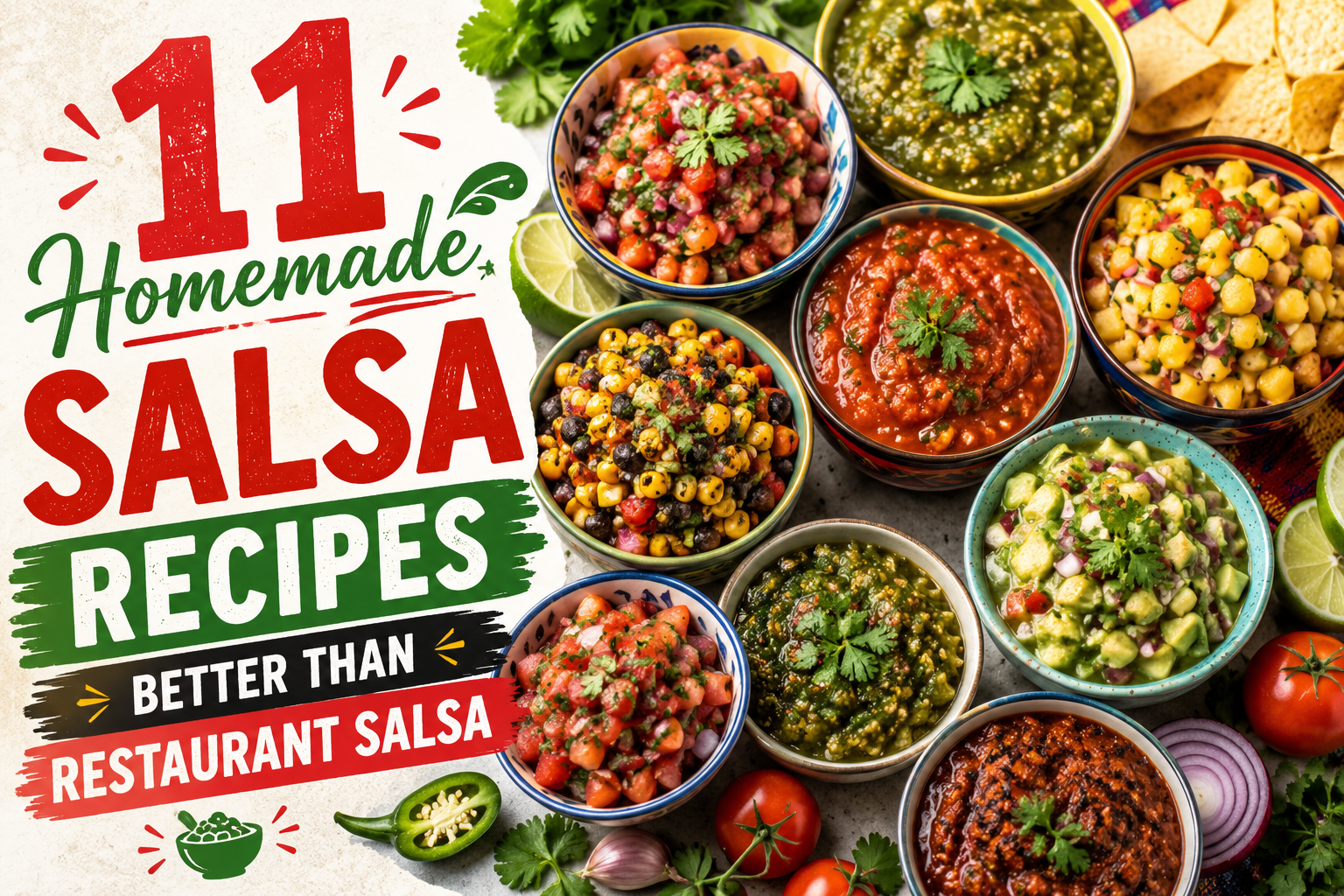
11 Homemade Salsa Recipes Better Than Restaurant Salsa
Restaurant salsa isn’t better because restaurants have better ingredients. It’s better because of technique.
Most homemade salsa tastes flat or watery because it starts with raw, uncharred ingredients thrown directly into a blender. Restaurant-style salsa tastes deeper because the tomatoes, garlic, and chiles are charred before blending — a technique called tostar that’s been central to Mexican cooking for centuries.
Once you understand that, making salsa that tastes like it came from somewhere good becomes straightforward. Below are 11 complete salsa recipes — blended and chunky, red and green, mild and very hot, cooked and fresh — with full ingredients and step-by-step instructions for every single one.
All 11 Recipes at a Glance
| # | Salsa | Style | Heat | Time |
|---|---|---|---|---|
| 1 | Fire-Roasted Blender Salsa | Blended | Medium | 15 min |
| 2 | Classic Pico de Gallo | Chunky / Fresh | Mild–Med | 10 min |
| 3 | Roasted Tomato and Garlic Salsa | Blended / Cooked | Mild | 35 min |
| 4 | Salsa Verde (Tomatillo) | Blended | Medium | 20 min |
| 5 | Mango Habanero Salsa | Chunky | Hot | 10 min |
| 6 | Chipotle Blender Salsa | Blended / Smoky | Medium | 10 min |
| 7 | Avocado Salsa (Salsa de Aguacate) | Blended / Creamy | Mild | 10 min |
| 8 | Chile de Árbol Salsa | Blended / Thin | Very Hot | 20 min |
| 9 | Peach Salsa | Chunky / Fresh | Mild | 10 min |
| 10 | Black Bean and Corn Salsa | Chunky / Hearty | Mild–Med | 10 min |
| 11 | Cooked Tomato Salsa Casera | Cooked / Classic | Mild–Med | 30 min |
“The difference between a salsa that tastes flat and one that tastes like a restaurant made it is almost always one step: charring the aromatics before you blend them.”
The Technique Behind All Good Salsa
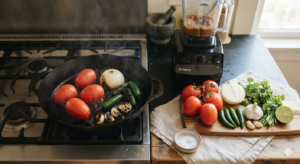
Dry Toasting (Tostar)
Place unpeeled garlic cloves, quartered onion, and whole chiles in a dry, un-oiled skillet over medium-high heat. Let them sit undisturbed until the underside is blackened in spots — 3–4 minutes — then turn and repeat. The blackening is not burning. It’s caramelization of the sugars on the surface that creates the deep, complex flavor restaurant salsa has and raw-ingredient salsa doesn’t.
Pulse, Don’t Purée
The blender setting matters more than most people realize. Continuous blending on high liquefies everything into a thin, uniform purée. Pulsing in short bursts gives you control over texture — you can stop when the salsa still has some character and body rather than running it until it’s completely smooth.
Salt and Rest
Salsa always tastes flat immediately after blending. Salt amplifies flavor, but it needs 15–30 minutes to fully integrate — the salt draws liquid from the tomatoes and distributes through the entire mixture. Taste and adjust after blending, then taste again after it’s rested. The finished product will almost always need more salt than you added originally.
1. Fire-Roasted Blender Salsa
The foundation recipe. This is the one that people taste and immediately ask what restaurant it’s from.
15 minMedium HeatMakes: 3 cups
Ingredients
- 2 cans (14.5 oz each) fire-roasted diced tomatoes, undrained
- 3 garlic cloves, unpeeled
- 1 small white onion, quartered
- 1–2 jalapeños, stems removed
- ½ cup fresh cilantro (leaves and stems)
- 1 tablespoon fresh lime juice
- ½ teaspoon ground cumin
- 1 teaspoon salt, plus more to taste
Instructions
- Heat a dry skillet over medium-high heat. Add unpeeled garlic, onion quarters, and whole jalapeños. Toast 4–5 minutes per side until blackened in spots. Remove and cool slightly.
- Squeeze garlic from skins. Add toasted garlic, onion, and jalapeños to a blender along with fire-roasted tomatoes and their juice, cilantro, lime juice, cumin, and salt.
- Pulse 6–8 times until slightly chunky. Taste and adjust salt and lime.
- Refrigerate 30 minutes before serving — the resting time matters significantly for flavor depth. Keeps 7 days refrigerated.
2. Classic Pico de Gallo
Always raw, always chunky, always served the same day. The freshest salsa on this list — and the fastest.
10 minNo CookMakes: 2 cups
Ingredients
- 4 large roma tomatoes, seeds removed and finely diced
- ½ white onion, finely diced
- 1–2 jalapeños, seeded and minced
- ½ cup fresh cilantro, finely chopped
- 2 garlic cloves, minced
- Juice of 2 limes
- ¾ teaspoon salt, plus more to taste
Instructions
- Combine all ingredients in a bowl and stir gently to combine without mashing the tomatoes.
- Taste and adjust — more lime for brightness, more jalapeño for heat, more salt if flat.
- Let sit 10–15 minutes at room temperature before serving so flavors meld. Serve within 2 hours — fresh tomatoes release liquid and the pico becomes watery if left longer.
Key rule: Remove tomato seeds before dicing. Seeds add water without adding flavor — discarding them keeps pico de gallo from turning into tomato soup.
3. Roasted Tomato and Garlic Salsa
Oven-roasted fresh tomatoes create a deeper, sweeter flavor than any canned version — worth the extra time for a special batch.
Prep: 10 minRoast: 25 minMakes: 2.5 cups
Ingredients
- 8 large roma tomatoes, halved
- 6 garlic cloves, unpeeled
- 1 white onion, quartered
- 2 jalapeños, halved
- 2 tablespoons olive oil
- ½ cup fresh cilantro
- Juice of 1 lime
- 1 teaspoon salt
Instructions
- Preheat oven to 425°F (220°C). Place tomatoes cut-side up, garlic cloves, onion quarters, and jalapeño halves on a baking sheet. Drizzle with olive oil and sprinkle with salt.
- Roast for 22–25 minutes until tomatoes are caramelized at the edges and slightly collapsed.
- Remove garlic from skins once cool enough to handle. Transfer everything — including all pan juices — to a blender.
- Add cilantro, lime juice, and salt. Pulse to desired consistency. Taste and adjust. The roasted tomato juice from the pan is full of flavor — scrape every drop in.
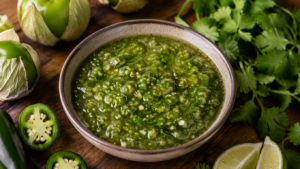
4. Salsa Verde (Roasted Tomatillo Salsa)
Tart, bright, slightly herby — the green salsa that works on enchiladas, tacos, eggs, and literally anything with pork.
20 minMedium HeatMakes: 2 cups
Ingredients
- 1 lb (450g) fresh tomatillos, husks removed and rinsed
- 2 serrano or jalapeño chiles
- 4 garlic cloves, unpeeled
- ½ white onion, roughly chopped
- ½ cup fresh cilantro
- Juice of 1 lime
- 1 teaspoon salt
Instructions
- Place tomatillos, chiles, and unpeeled garlic on a baking sheet. Broil 4 inches from heat for 5–6 minutes until tomatillos blacken and blister on top. Flip and broil 4 more minutes. The blackening is intentional.
- Let cool slightly. Squeeze garlic from skins.
- Blend tomatillos, chiles, garlic, onion, cilantro, lime juice, and salt until smooth to slightly chunky. Start on low — the hot tomatillos can splash.
- Taste and adjust salt and lime. Salsa verde should taste noticeably tart — that’s correct. Keeps 5 days refrigerated.
5. Mango Habanero Salsa
Sweet tropical mango cut with the serious heat of habanero — this is the salsa that surprises people who thought they knew what salsa was.
10 minVery HotMakes: 2 cups
Ingredients
- 2 ripe mangoes, peeled and finely diced
- ½–1 habanero pepper, seeded and very finely minced (wear gloves)
- ¼ red onion, finely diced
- ¼ cup fresh cilantro, chopped
- Juice of 2 limes
- ½ teaspoon salt
Instructions
- Combine diced mango, red onion, and cilantro in a bowl.
- Add habanero — start with ½ a pepper, taste, and add more only if you want more heat. Habaneros are roughly 10–40x hotter than jalapeños.
- Add lime juice and salt. Stir gently.
- Let sit 10 minutes before serving. Best used the same day. Pairs particularly well with grilled fish and pulled pork.
Warning: Always handle habaneros with gloves. The oils transfer to fingers and will burn eyes and skin for hours. Wash hands and all cutting surfaces thoroughly after handling.
6. Chipotle Blender Salsa
Canned chipotles in adobo sauce do the heavy lifting here — smoky, slightly sweet, and complex in a way that takes most salsas an hour to develop.
10 minMedium HeatMakes: 2.5 cups
Ingredients
- 1 can (28 oz) crushed or whole tomatoes
- 2–3 chipotle chiles in adobo sauce (from a can), plus 1 tablespoon of the adobo sauce
- 3 garlic cloves
- ¼ white onion
- Juice of 1 lime
- 1 teaspoon salt, plus more to taste
Instructions
- Add tomatoes, chipotle chiles, adobo sauce, garlic, onion, lime juice, and salt to a blender.
- Blend for 30–45 seconds until smooth. Taste — adjust salt and lime. If too smoky, reduce to 1 chipotle pepper next time.
- This salsa is ready immediately — no resting needed because the adobo sauce already provides depth. Keeps 7 days refrigerated.
🔗 More Mexican-Inspired Recipes
Already making salsa? Here’s the one to bookmark alongside it
The full deep-dive into fire-roasted salsa technique — the charring method, canned vs fresh tomatoes, and the chunky pico-style variation all in one place.

Avocado salsa — somewhere between guacamole and a salsa verde, and better than either at certain things.
7. Avocado Salsa (Salsa de Aguacate)
Not guacamole. The avocado is blended into a thin, pourable sauce — creamy, fresh, and completely different in texture from anything you’ve had before.
10 minMildMakes: 1.5 cups
Ingredients
- 2 ripe avocados, peeled and pitted
- ½ cup (120ml) water (more for thinner consistency)
- 2 serrano or jalapeño chiles, stems removed
- 2 garlic cloves
- ¼ cup fresh cilantro
- Juice of 1 lime
- ¾ teaspoon salt
Instructions
- Add all ingredients to a blender. Blend on high for 45–60 seconds until completely smooth and pourable. Add more water 1 tablespoon at a time if too thick.
- Taste and adjust lime and salt. This salsa should taste bright and fresh — the lime prevents browning.
- Serve immediately or refrigerate with plastic wrap pressed directly against the surface to prevent browning. Best within 6 hours.
8. Chile de Árbol Salsa
The table salsa served at taqueria tables that makes your eyes water in the best possible way. Thin, red, very hot — the one people ask for more of even while they’re sweating.
20 minVery HotMakes: 1.5 cups
Ingredients
- 15–20 dried chiles de árbol, stems removed (seeds in for maximum heat)
- 4 roma tomatoes
- 4 garlic cloves, unpeeled
- ½ white onion
- ½ cup (120ml) water
- 1 teaspoon salt
Instructions
- Toast dried chiles in a dry skillet over medium heat for 30–60 seconds until fragrant and slightly darkened. Do not let them blacken completely — they turn bitter. Transfer to a bowl and cover with boiling water. Soak 10 minutes until softened.
- In the same skillet, char tomatoes, unpeeled garlic, and onion until blackened in spots, about 8 minutes total, turning once.
- Peel garlic. Drain the rehydrated chiles (discard soaking water — it’s bitter).
- Blend chiles, tomatoes, garlic, onion, water, and salt until completely smooth. Add more water for a thinner consistency. Keeps 5 days refrigerated.
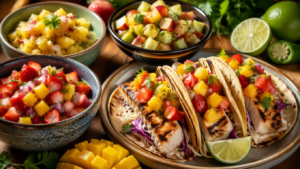
9. Peach Salsa
Sweet ripe peach with jalapeño, red onion, and lime — a summer salsa that works with fish, chicken, pulled pork, or just chips.
10 minNo CookMakes: 2 cups
Ingredients
- 3 large ripe peaches, peeled and finely diced
- ½ red onion, finely diced
- 1 jalapeño, seeded and minced
- ½ red bell pepper, finely diced
- ⅓ cup fresh cilantro, chopped
- Juice of 2 limes
- ½ teaspoon salt
Instructions
- Combine all ingredients in a bowl. Stir gently to mix without mashing the peach.
- Taste and adjust — more lime for brightness, more jalapeño for heat.
- Let sit 10 minutes before serving. Do not make more than 2 hours ahead — peaches release a lot of juice over time and the salsa becomes watery.
10. Black Bean and Corn Salsa
The only salsa on this list that’s genuinely filling as a side dish on its own — hearty, colorful, and doubles as cowboy caviar.
10 minNo CookMakes: 3 cups
Ingredients
- 1 can (400g) black beans, drained and rinsed
- 1½ cups corn kernels (fresh, frozen-thawed, or canned)
- 1 cup cherry tomatoes, quartered
- ½ red onion, finely diced
- 1 jalapeño, seeded and minced
- ¼ cup fresh cilantro
- 3 tablespoons olive oil
- Juice of 2 limes
- 1 teaspoon cumin, salt and pepper to taste
Instructions
- Whisk olive oil, lime juice, cumin, salt, and pepper together in a large bowl.
- Add all remaining ingredients and toss well to coat everything in the dressing.
- Let sit 15 minutes before serving to allow the beans and corn to absorb the lime dressing. Keeps 3 days refrigerated — gets better on day two.
11. Cooked Tomato Salsa Casera
Salsa casera — “house salsa” — is the cooked red salsa that most Mexican households keep on the stove. Simmering transforms the raw ingredients into something rounded, deeply flavored, and versatile.
Prep: 10 minCook: 20 minMakes: 2.5 cups
Ingredients
- 6 large roma tomatoes, roughly chopped
- 3 garlic cloves, minced
- ½ white onion, diced
- 2 jalapeños, diced (seeds in or out based on heat preference)
- 2 tablespoons vegetable oil
- ½ cup fresh cilantro
- ½ teaspoon dried oregano
- 1 teaspoon salt
Instructions
- Heat oil in a saucepan over medium heat. Add onion and jalapeño. Cook 4 minutes until softened.
- Add garlic and cook 1 minute until fragrant.
- Add chopped tomatoes and oregano. Increase heat to medium-high and cook 12–15 minutes, stirring occasionally, until tomatoes fully break down and the mixture thickens.
- Transfer to a blender and add cilantro and salt. Blend until smooth or slightly chunky. Taste and adjust seasoning.
- Cool completely before refrigerating. Keeps 7 days. The flavor continues to develop and improve over the first 24 hours.
Storage Guide for All 11 Salsas
| Salsa | Fridge Life | Freezer? |
|---|---|---|
| Fire-Roasted Blender Salsa | 7 days | ✅ Yes |
| Classic Pico de Gallo | 2 days | ❌ No |
| Roasted Tomato and Garlic | 7 days | ✅ Yes |
| Salsa Verde | 5 days | ✅ Yes |
| Mango Habanero | Same day | ❌ No |
| Chipotle Blender Salsa | 7 days | ✅ Yes |
| Avocado Salsa | 6 hours | ❌ No |
| Chile de Árbol Salsa | 5 days | ✅ Yes |
| Peach Salsa | 2 hours | ❌ No |
| Black Bean and Corn | 3 days | ❌ No |
| Salsa Casera (Cooked) | 7 days | ✅ Yes |
Which Salsa Goes With What
| Best For | Recommended Salsas |
|---|---|
| Tortilla chips | Fire-roasted (#1), Pico de Gallo (#2), Chipotle (#6) |
| Fish tacos | Mango Habanero (#5), Peach (#9), Avocado Salsa (#7) |
| Chicken tacos | Salsa Verde (#4), Fire-roasted (#1), Chipotle (#6) |
| Eggs & breakfast | Salsa Casera (#11), Pico (#2), Salsa Verde (#4) |
| Grilled steak | Chile de Árbol (#8), Roasted Tomato (#3) |
| Parties & platters | Black Bean & Corn (#10), Fire-Roasted (#1), Chipotle (#6) |
⭐ Key Takeaways
- Charring aromatics in a dry skillet before blending is the single technique that makes homemade salsa taste like restaurant salsa.
- Pulse, don’t purée — continuous blending produces thin, watery salsa with no texture. 5–8 short pulses gives you control.
- Salt and rest — every salsa tastes flat immediately after blending. Salt needs 15–30 minutes to distribute and develop.
- Remove tomato seeds from fresh salsas (pico, peach) before dicing — seeds add water without adding flavor.
- Fresh salsas (pico, peach, mango, avocado) must be served same-day. Cooked and blended salsas improve with age and store for up to a week.
- The chipotle blender salsa is the fastest shortcut that tastes like the most work — 10 minutes, zero cooking, genuinely impressive depth from the adobo sauce alone.
Conclusion: Eleven Salsas, One Principle
Every salsa on this list — regardless of style, heat level, or ingredients — works because it follows one of two approaches: either charring the aromatics before blending for depth, or combining genuinely fresh ingredients with enough acid and salt to make each element taste more like itself.
The Fire-Roasted Blender Salsa is the one to start with if you’re new to making salsa from scratch. The Salsa Verde is the one to make once you’re confident. The Chipotle Blender Salsa is the 10-minute shortcut for the nights you want something good without any real effort. And the Pico de Gallo is the one to make when your tomatoes are perfect and you want nothing to interfere with them.
Pick one, make it tonight, and notice the difference that charring makes.
“Good salsa is not about the quantity of ingredients. It is about what happens to them before they hit the blender.”
Frequently Asked Questions

My name is Hamza Waheed, and I am an SEO expert with over 7+ years of experience in search engine optimization and the keto blogging industry. I specialize in creating SEO-driven content focused on keto recipes, low-carb living, and organic traffic growth. I combine technical SEO skills with practical health and nutrition content to deliver useful and engaging information for readers.